Week 6 TingFung Chu Media technology and Society

Week 6

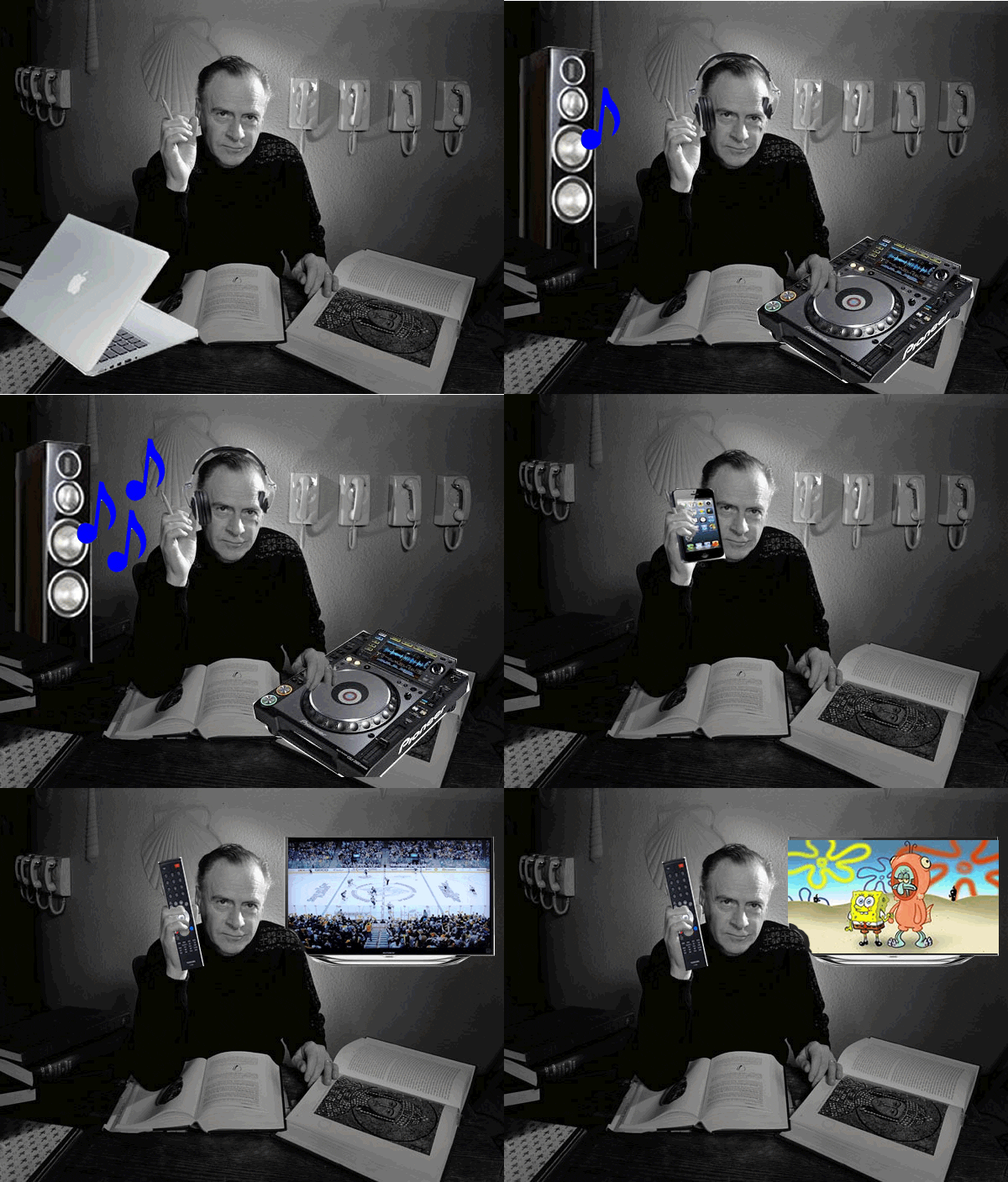
In the current generation, this is the technologically advanced generation or called Information Age. In Media technology and Society by Brian Winston, he describes the concept of information Revolution already existed in the history. Information Revolution is implicitly historical. Basically, this is saying how people could know the situation has changed, how people resolve the issue without the relevant information. He states that is like the principle of “Science”. People don’t have any idea how to solve the problem that they have never encountered before, so this is like they need to figure out to explore a new way to solve the problem.

In addition, he illustrates the process of the telecommunication between the past to the future. First, once the new technology has been invented, that will be using as the prototype, to see how the public reacts to it. The second phase, the inventor or technologist see the function of the prototype that could fulfill the necessity to society.  There are four types of prototypes, rejected, accepted, parallel and partial. Aside from the partial one, the other three prototypes are working to being in this process. After the inventor keeps adjusting and improving the prototype until the majority of people has completely adapted to the new technology become part of life. The third phase, diffusion, which is the “Law”, a universal hypothesis, is the suppression of radical potential. Basically, this phrase is focused on the production. A practical product is being sold into the market. Yet the entire process is sustainable and keep doing that way. Therefore, the telecommunication is constantly changeable between the people and society.

week 1  Culture and Anarch- TingFung Chu

For week 1 I chose Culture and Anarchy By Adrienne Rich. Rich shows her anger on women who are struggling for a voice and their right — women who tend to be weak, powerless, not educated, etc. But they fight for what they deserve and they should.  She thinks women will experience this anger and if they can accept it, it will be an emancipation concept to women. Rich also thinks that feminist anger is acceptable and even commendable.

Yvonne Jordan NYPL Oral Project

During this project i chose to transcribe, Dr. William Seraile interview of his son Aden Seraile. I chose this story  because his story is relatable to me. He was born and raised in Harlem before it was an upcoming neighborhood, whereas myself I grew up in Bed-Stuy which is a popular upcoming neighborhood now but before gentrification it wasn’t an ideal neighborhood to be in. Listening to Aden’s experience, I can remember being that kid in private school near Dumbo in Brooklyn and telling kids where i lived I was judged. Also, in the interview Aden talked about how gentrification has brought the neighborhood back and gave it what it needed.

The interview was executed nicely but the audio had an echo and you could hear other things going on in the background, such as steps being taken, if something was being place down, sneezes. I had to lower down the volume in order to make it easier to listen to because audio levels I guess aren’t properly together (if that makes sense). What i did notice about the transcript was the audio timing and the timing on the transcript didn’t match the other. Also the transcript doesn’t have all the words from the interview and they are cut short.

NYPL ORAL HISTORY PROJECT

During this project, i decided to transcribe  Melba Wilson mainly because she was an African american woman living in my neighborhood of Harlem. the interview was based on Melba’s personal and family life. she was born in Harlem, however her family is mainly in south Carolina. she talks about her upbringing and then owning a restaurant in her own neighborhood of Harlem.  surprisingly i realized that her aunt owns the world renowned Sylvia’s restaurant in Harlem. she talks about the role soul food has had in her life and family life and how it has influenced her to embark in her own business.

overall i found it an easy experience. but at times, i found it difficult  for many reasons. although she spoke clearly it seemed as if the audio would go in and out, which i could see being a problem for full transcription. i had to constantly lower any background or environmental noise, so i can hear it clearly and even then i had to replay the audio. reading the transcription that was already done by the computer, i noticed some mistakes, as it would transcribe words into the wrong but similar words. there were few edits that were done from outside so there were many computer generated mistakes. sometimes it would have the wrong pronunciation points or grammar structure. however through these mistakes i realized the computer has a high rate of understanding and transcribing human voices clear.

Week 12 Yvonne Jordan:Social Media Twitterbots and Snapchat

For this weeks post i chose ” Internet of Women”. This article spoke on how the hashtag MeToo movement started on social media and created on the internet to make a “feminizing” industry. The impact that the one hashtag caused  a fundamental change in the way sexual harassment, a subject that up until now had been treated as almost taboo, could be openly discussed and brought to light. This would not have been possible without the medium of social media.


Week 13 Yvonne Jordan: Data and Data literacy and Search

In “Is Google Making Us Stupid”, Stephan Carrs argues that our brain is being reprogrammed to not think anymore and google has stole our thought process. Being that this article was written 10 years it resonated with me because although I was reading about how he got extremely distracted when reading long pieces of writing, I could feel myself doing the same things. I would read a paragraph of what Carr was saying and then dismiss it completely and go on my phone or search something up on another tab.

Carr does a good job of illustrating how various technologies throughout human history, like the mechanical clock, have altered the way we perceive and understand the world around us. These examples add a historical authority to his argument and demonstrate that as different technologies are incorporated into societies, they can fundamentally change how humans act and think.

Week 10 Victor Afolabi: Listening


“AN ABSTRACT PAINTING REPRESENTS A DIRECT MANIFESTATION OF CREATIVE THOUGHT PROCESS AS THEY MIGHT APEAR IN COMPUTER DESIGNS”

(McLuhan, P. 24)

We construct words and insert our identities into the as they are built because the come from our brain. There are many fonts of the letter A which exist. All book bags aren’t the same but their still book bags. In fact all books are a molded thoughts put together in union. The construct of the print in its final product may look identical in volume, or dimensions but the cover designs are different. That’s why we all have brains and think differently to make choices that are then noted as ours in ownership.


Mies Van Der Rohe once said,  “A chair is a very difficult object. A skyscraper is almost easier. Architecture starts when you carefully put two bricks together. There it begins.” 

This phrase has been referenced by many important post modern architects and artists who believe in the concept of minimalism. Can his words be his ghost yearning to accomplish all that he couldn’t while he was alive? Quotes alone can inspire a new wave of creative thinkers as this statement was made by a man who died in August 17, 1969, however his words still live in the year 2018 and it his massage that makes it available on the internet as content and even in this blog post. 

Week 11 Victor Afolabi: Reading Alone and Together

“NEW AGIPPA FILES”

The original story. (c) 1992

Snapchat went viral, then Instagram copied and invented stories, then facebook joined in since their instagram’s parent company.

Snapchat went viral in 2015 and it has since became possible for people to learn more details about your location, your current status via the live option, and transparency became something we adapted to on a daily basis since these documents automatically deleted in 24 hours.


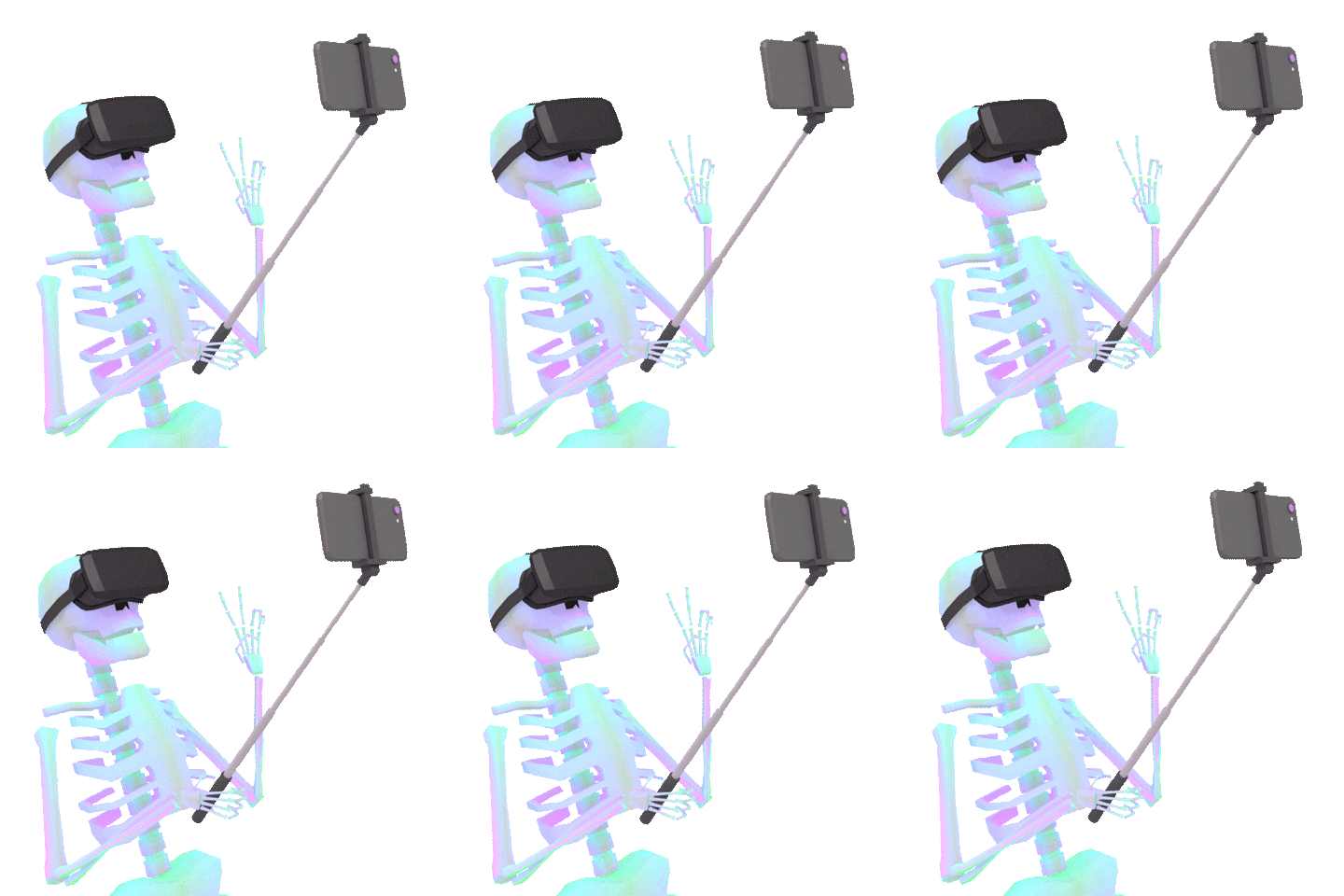
The rates of selfies skyrocketed as people bought selfie-sticks that summer(2015). It became a trend because tourists made it a cool accessory for recording their videos as they vacation especially with family spent in New York City.